I have hired somewhere north of a thousand software engineers. At VinSolutions, at Stackify, and now at Full Scale, where we build dedicated development teams for companies across the US.
After that many interviews, that many hires, that many engineers I have watched grow and stall and grow again, I have a pretty clear picture of what separates the senior engineers from everyone else.
It is not what most people think.
Why Years of Experience Are the Wrong Metric
Industry data puts the average time to reach senior engineer at around six years. I do not think that number tells you much. We wrote a whole breakdown of what each engineer level actually looks like and the consistent finding is that the levels are about problem scope and ownership, not a clock.
If you have worked at the same job for ten years, you could just as easily be a junior developer with ten years of experience.
Seniority has nothing to do with how many years of experience you have.
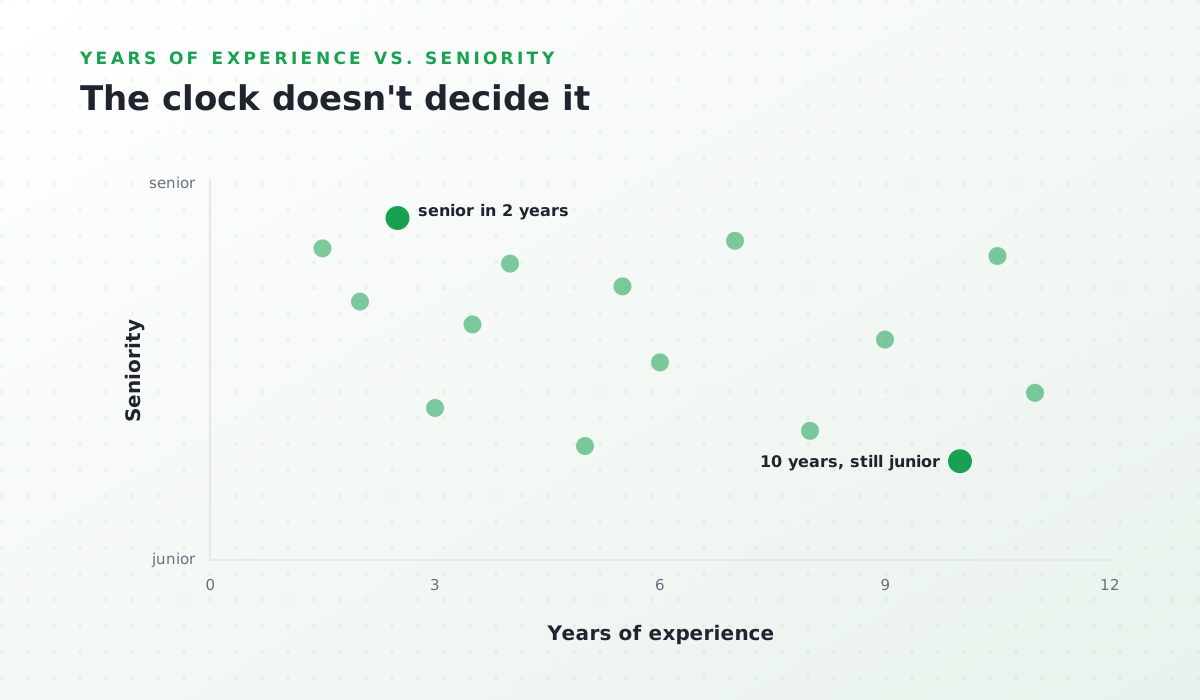
The title does not accumulate like PTO. Either the mindset shift happened, or it did not. Time passing is not the same as the shift happening. I have hired engineers with two years of experience who were clearly senior, and I have interviewed people with a decade on their resume who were not close.
So when someone asks me how long it takes to become a senior engineer, my honest answer is: the clock is the wrong thing to be watching. What you actually want to know is what changes when someone makes the leap.
And the first thing that changes is how they handle questions they do not fully understand yet.
The Signal I Look for First: Do They Ask Why?
I have done a lot of interviews. I have watched a lot of engineers answer questions.
The clearest signal I have found is whether someone stops to ask why before they start answering.
A junior engineer will answer the question you asked. You ask how they would structure an API, and they are off to the races. They solve the problem you described.
A senior engineer pauses. They want to know why you asked. What is the API actually for? What are the constraints? Who consumes it? What problem are we actually trying to solve?
That one pause is the thing. It sounds small. It is not.
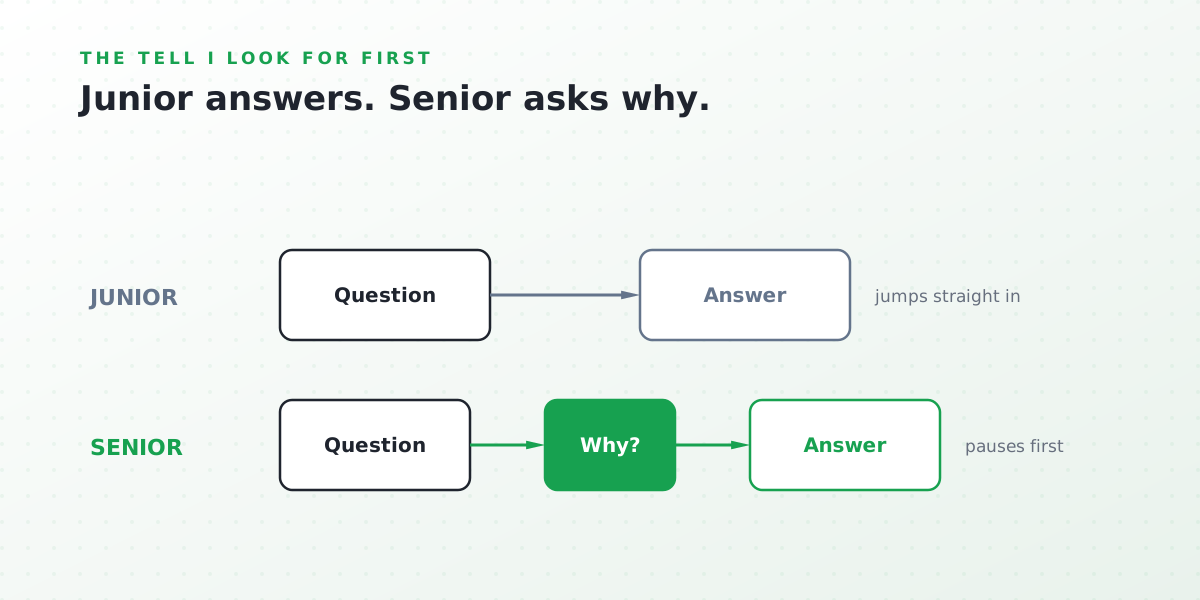
Answering a question before you understand why it was asked is one of the clearest tells I see in interviews. It does not mean the engineer is bad at their job. It means they have not yet developed the habit of interrogating the problem before jumping to the solution.
Senior engineers do this by reflex. Before they write a line of code, they understand what they are building and why. Before they estimate a task, they question the assumption behind it. Before they answer in a meeting, they stop and think about what is actually being asked.
Every engineer should do this. But for a senior engineer it is not optional. It is the baseline.
This is really the whole thing: asking why is the behavior that separates someone who executes from someone who owns. And ownership is what the senior level is actually about.
What a Senior Software Engineer Actually Does Differently
The advice I see everywhere for leveling up as a developer is almost entirely technical. Learn design patterns. Get better at system design. Do more LeetCode. That stuff matters and I am not going to pretend otherwise. But technical skill is the floor, not the ceiling.
The engineers I have promoted, the ones I would describe without hesitation as senior, share something that has nothing to do with code.
They think outside the code.
Here is what that looks like in practice. Can they lead a team? Can they run a big project from start to finish, not just own their slice of it? Can they architect something complex and see it through? Can they have a real conversation with a customer about what the customer actually needs?
That last one gets underweighted more than anything else. Most developers think about the code. Senior developers think about the customer.
I have interviewed technically brilliant engineers who could not care less whether the software solved the problem. They cared whether it was elegant. Whether it was clever. Whether their peers would admire it. Whether it was the right pattern.
A senior engineer cares about whether the thing they built actually works for the person using it. That sounds obvious but it changes everything. It changes what questions you ask when you get a spec. It changes what edge cases you think about. It changes how you push back on requirements. It changes what you optimize for.
The engineers who make this shift stop thinking like developers and start thinking like owners. They care about the outcome, not just the output.
That is a hard thing to teach. You either develop it or you do not.
How to Actually Get There
The good news is that the mindset shift is not random. You can go looking for it.
If you want to accelerate the transition, start with the one habit that matters most: ask why before you do anything. Before you write a line of code. Before you estimate a ticket. Before you answer a question in a meeting. Ask yourself what the actual problem is. What does the customer actually need? Why is this being asked?
That habit alone will start changing how people perceive you. You go from being the person who executes to the person who thinks. That is the visible version of the shift.
The other thing that moves the needle is deliberately expanding your scope. Volunteer to lead something you have not led before. Take on a project where you are responsible for the outcome, not just your piece. Get in front of customers if you can, even just to listen. The engineers I have seen make this transition fastest are almost always the ones who stopped waiting for someone to hand them a ticket and started looking for problems to own.
People ask me whether you have to job-hop to become senior faster. Sometimes changing companies resets the clock in a useful way, but it is not the variable that matters. I have seen engineers make the shift in two years at the same company. I have seen people with ten years at a dozen companies who have not made it.
The difference is never the years. It is whether they figured out that the job is bigger than the code.