
How to Configure Microsoft Word 2013 to Connect to Geekswithblogs

The first step in this process is to open Word 2013.

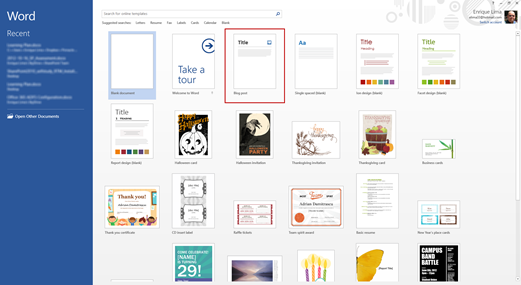
Once there, you will have the different templates available. You will select Blog Post.
102812 1547 HowtoConfig1

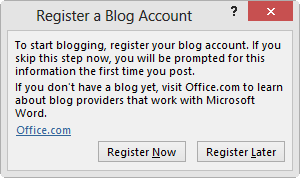
Once the template for Blog Post opens, you will have a dialog popup with the option to Register a Blog Account. And click on Register Now.
102812 1547 HowtoConfig2

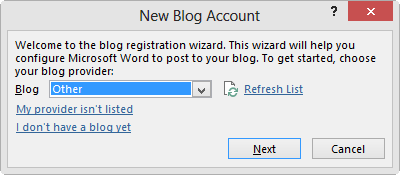
The next part of the dialog will prompt you to provide the New Blog Account details, starting with the type of Blog you have (SharePoint, WordPress, TypePad and others are listed). In our case for GeeksWithBlogs, we will select Other.
102812 1547 HowtoConfig3

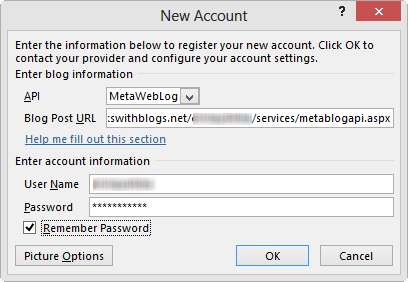
Now come the juicy details! Under the New Account dialog, you will have the API set to MetaWebLog.
Then provide the Blog Post URL, this needs to be https://geekswithblogs.net//services/metablogapi.aspx (remember to change the part with your info).
Then, enter your User Name and Password, click OK and you should be set (you will receive a dialog letting you know information will be transferred).
102812 1547 HowtoConfig4

Hope it works for you!

This article is part of the GWB Archives. Original Author: Enrique Lima

New on Geeks with Blogs

  • We Won The One Award I Actually Care About

    Full Scale made the Inc. 5000 for the fifth year straight, the 12th listing across my three companies. Here is why the one award you cannot buy is worth stopping for.

  • Your Customers Build the Features Now

    I let a tool I liked sit dead for a year rather than build the features I wanted. An MCP server meant I never had to, and your customers can do the same to your product.

  • Get the Size of a Directory in Linux the Easy Way

    du -sh for the quick answer, ncdu for the cleanup, df for the disk itself: every command for checking directory size in Linux, plus why du and df never agree.

  • Vim Search and Replace: The Ultimate Guide

    One :%s command replaces every match in a file before a find dialog would even open. The Vim substitute patterns worth the muscle memory: flags, ranges, capture groups, and multi-file edits.